Santa Clarita Tree Service
(661) 338-5661
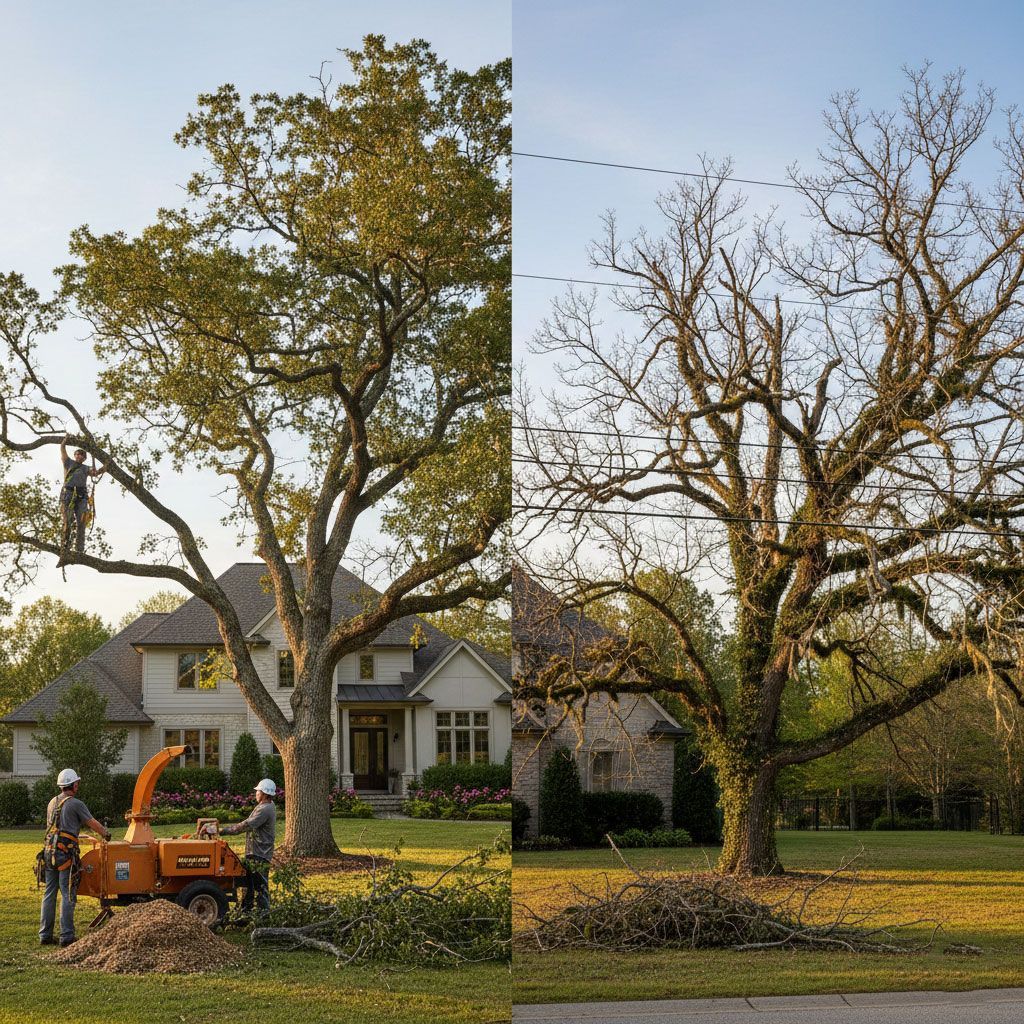
Deciding whether to remove a tree entirely or preserve it through strategic pruning requires careful evaluation of multiple factors. This choice impacts your property's aesthetics, safety, and budget for years to come.
Understanding the distinct purposes of each option and recognizing warning signs helps homeowners make informed decisions that balance tree preservation with practical considerations.
Assess Overall Tree Health and Structural Integrity
Trees showing more than 50 percent dead or damaged wood generally warrant removal rather than pruning.
- Extensive decay, hollow trunks, or significant root damage compromise stability beyond pruning capabilities
- Large cavities or extensive fungal growth indicate internal rot that threatens structural soundness
- Multiple dead or dying major limbs suggest systemic health problems affecting the entire tree
- Healthy trees with isolated dead branches or minor storm damage respond well to corrective trimming
- Trees with good root systems and solid trunks often thrive for decades after proper pruning
Conversely, trees with localized issues benefit tremendously from pruning that redirects their energy toward healthy growth.
Evaluate Safety Risks and Proximity to Structures
Trees leaning significantly toward buildings, power lines, or high-traffic areas may require removal if their trajectory threatens property or people.
- Large cracks in trunks or major branch unions pose imminent failure risks pruning cannot eliminate
- Trees with split or damaged main leaders create ongoing hazards regardless of crown maintenance
- Proximity to children's play areas, patios, or driveways demands extra scrutiny of potential failure points
- Trees with manageable clearance issues often need only strategic pruning for safe distances
- Removing interfering branches while preserving the tree maintains shade and property value
Safety considerations should always take precedence over aesthetic preferences or attachment to existing trees.
Consider Disease and Pest Infestation Severity
Certain diseases like oak wilt or Dutch elm disease spread systemically through trees, making removal necessary to prevent transmission.
- Severe pest infestations compromising the entire vascular system demand removal when treatment proves ineffective
- Diseases affecting the cambium layer or root system cannot be addressed through branch removal alone
- Localized infections or early-stage pest problems often respond to pruning infected branches
- Removing diseased limbs prevents spread while giving the tree's immune system opportunity to recover
- Some conditions require removal to protect neighboring trees from infection or infestation
Professional diagnosis helps distinguish between manageable problems and those requiring complete removal.
Calculate Long-Term Costs and Maintenance Requirements
A tree requiring repeated emergency pruning every year or two often costs more over time than removal and replacement.
- Trees planted in inappropriate locations create perpetual maintenance expenses that removal eliminates
- Species too large for the available space need constant reduction to prevent property interference
- Trees in wrong soil conditions or climate zones struggle continuously despite regular care
- Well-suited trees typically need pruning only every three to five years, making preservation economical
- Factor in replacement cost of mature tree's shade, cooling effects, and aesthetic contributions
Economic analysis should include both direct costs and the value trees provide to your property.
Examine Root System Damage and Site Conditions
Trees with more than 30 percent root system damage from construction, trenching, or soil compaction lack foundation for long-term stability.
- Root rot diseases affecting major structural roots compromise stability beyond recovery
- Severe grade changes or soil removal exposing major roots often necessitate removal
- Surface root issues or girdling roots caught early may require monitoring and crown reduction
- Minor excavation damage might need balancing through pruning to match compromised root capacity
- Healthy roots support substantial pruning to reshape or reduce tree size while maintaining stability
Root health determines whether the tree can support continued growth or poses increasing failure risk.
Making the Decision That Serves Your Landscape Best
The choice between removal and pruning ultimately depends on whether the tree's structural foundation remains sound and problems can be addressed without compromising safety. Consulting certified arborists provides professional assessment of factors invisible to untrained eyes, from internal decay to root health.
When trees offer years of continued service with appropriate pruning, preservation honors their contribution to your property while managing specific concerns. However, recognizing when a tree has reached the end of its safe lifespan protects your family and property, making room for new plantings that will provide beauty and benefits for the next generation.