Santa Clarita Tree Service
(661) 338-5661
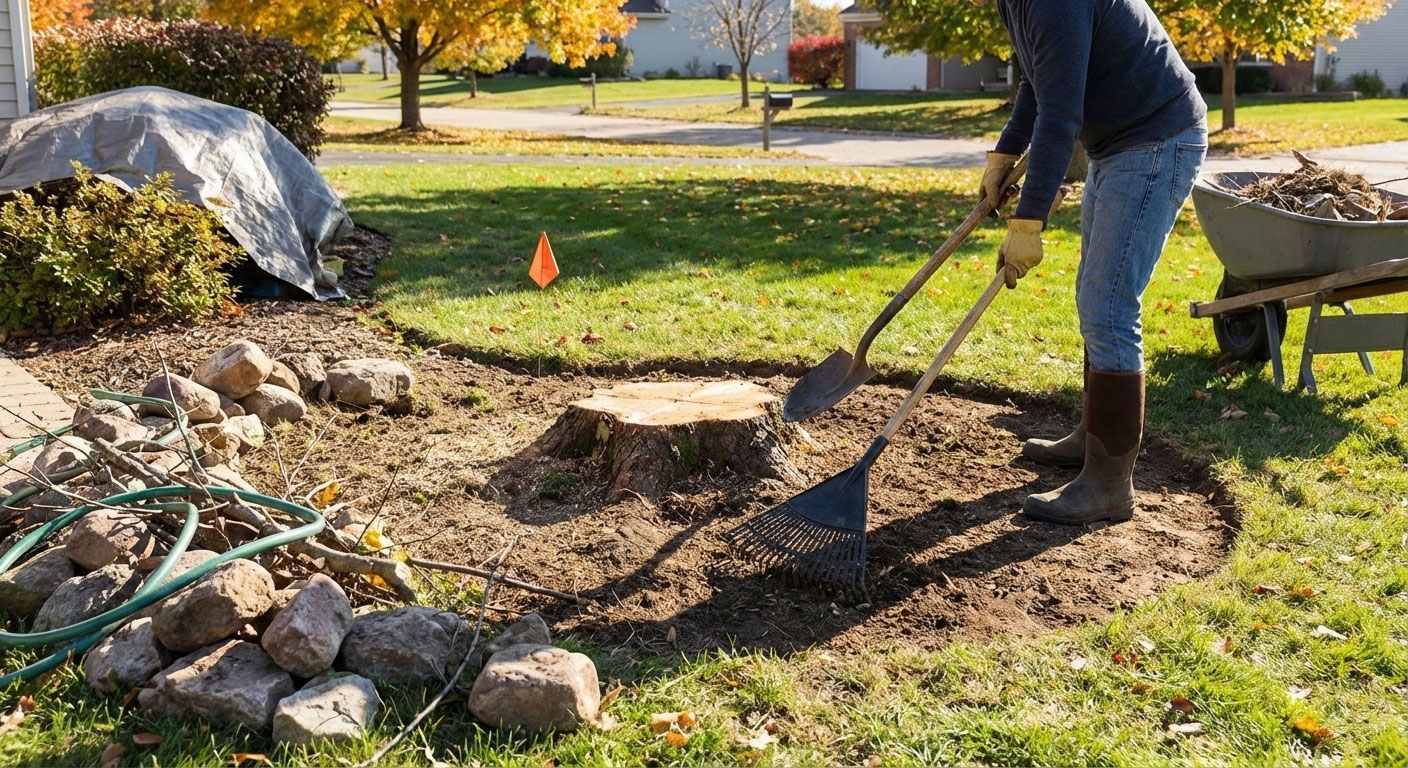
Stump grinding transforms an unsightly tree remnant into mulch, reclaiming valuable yard space and eliminating tripping hazards. Proper preparation ensures the job proceeds smoothly, protects your property from damage, and helps professionals complete the work efficiently.
Taking time to prepare your yard beforehand saves money, prevents utility strikes, and creates a safer work environment for everyone involved.
Clear the Area Around the Stump
Remove all obstacles within a 10-foot radius of the stump to give equipment operators adequate maneuvering space.
- Relocate rocks, garden decorations, toys, hoses, and lawn furniture to prevent damage from flying wood chips
- Remove or secure any items that could interfere with equipment movement or operator visibility
- Check for low-hanging branches that might obstruct the grinder's access or movement
- Create clear pathways from the access point to the stump location
- Protect nearby plants with tarps or temporary barriers if they cannot be moved
Pay special attention to the spray radius of debris, which can travel several feet in all directions during the grinding process.
Mark Underground Utilities and Irrigation Systems
Contact your local utility notification service at least 48 hours before the scheduled grinding to have underground lines marked.
- Call 811 or your local utility locator service for free marking of gas, electric, water, and telecommunications lines
- Document the location of sprinkler heads, irrigation lines, and drainage pipes that utility companies won't mark
- Use bright flags or spray paint to indicate private utility systems and irrigation components
- Map out any invisible dog fences, landscape lighting wiring, or pond pumps near the stump
- Take photos of marked areas for reference and to share with the grinding crew
Grinder teeth operate at depths where they can easily damage plastic pipes and wiring buried near stumps, making accurate marking essential.
Trim Surrounding Vegetation and Grass
Mow the lawn around the stump and trim back any bushes, flowers, or ground cover within several feet of the work zone.
- Cut grass to a short height around the stump to improve visibility of hazards and terrain
- Trim back ornamental grasses, hostas, and perennials that border the stump area
- Prune shrub branches that extend over the work zone to prevent damage
- Remove or tie back vines growing on or near the stump
- Rake away leaves, pine needles, and mulch to expose the ground surface clearly
Clean sightlines reduce the risk of errors and help the crew work more efficiently while minimizing damage to your landscaping.
Measure Stump Dimensions and Check Access Points
Note the stump's diameter and height, along with the width of gates and pathways leading to it.
- Measure the stump diameter at its widest point and record the height above ground
- Check all gate widths along the route to the stump location
- Measure narrow passages between buildings, fences, or other structures
- Note any overhead clearances such as arbors, clotheslines, or tree branches
- Identify soft ground areas that might not support heavy equipment
Some grinding equipment requires 36 inches or more of clearance, while compact machines can navigate narrower spaces with advance notice.
Remove Old Hardware and Foreign Objects
Inspect the stump carefully for nails, screws, wire, or metal stakes that might have been driven into the wood over the years.
- Check for old clothesline attachments, fence staples, or decorative hardware embedded in the wood
- Look for wire, chains, or cables that may have become grown into the bark
- Remove visible rocks from the root crown and soil immediately surrounding the stump
- Pull out any metal stakes or rebar that may have been driven near the base
- Notify the crew about any hardware you cannot remove yourself
Even small metal objects can chip expensive carbide teeth when struck at high speed, potentially adding costs or delaying the job.
Ready Your Property for Professional Results
Thorough preparation demonstrates respect for the professionals doing the work while protecting your investment in your property. A well-prepared site allows crews to focus on the grinding itself rather than dealing with preventable obstacles, often resulting in cleaner results and faster completion times.
The minimal effort required to clear areas, mark utilities, and remove hazards pays dividends in safety, efficiency, and satisfaction with the final outcome. Your preparation creates the foundation for transforming that
stubborn stump into usable space, whether you're planning to plant grass, install a patio, or landscape the area with new features.