Santa Clarita Tree Service
(661) 338-5661
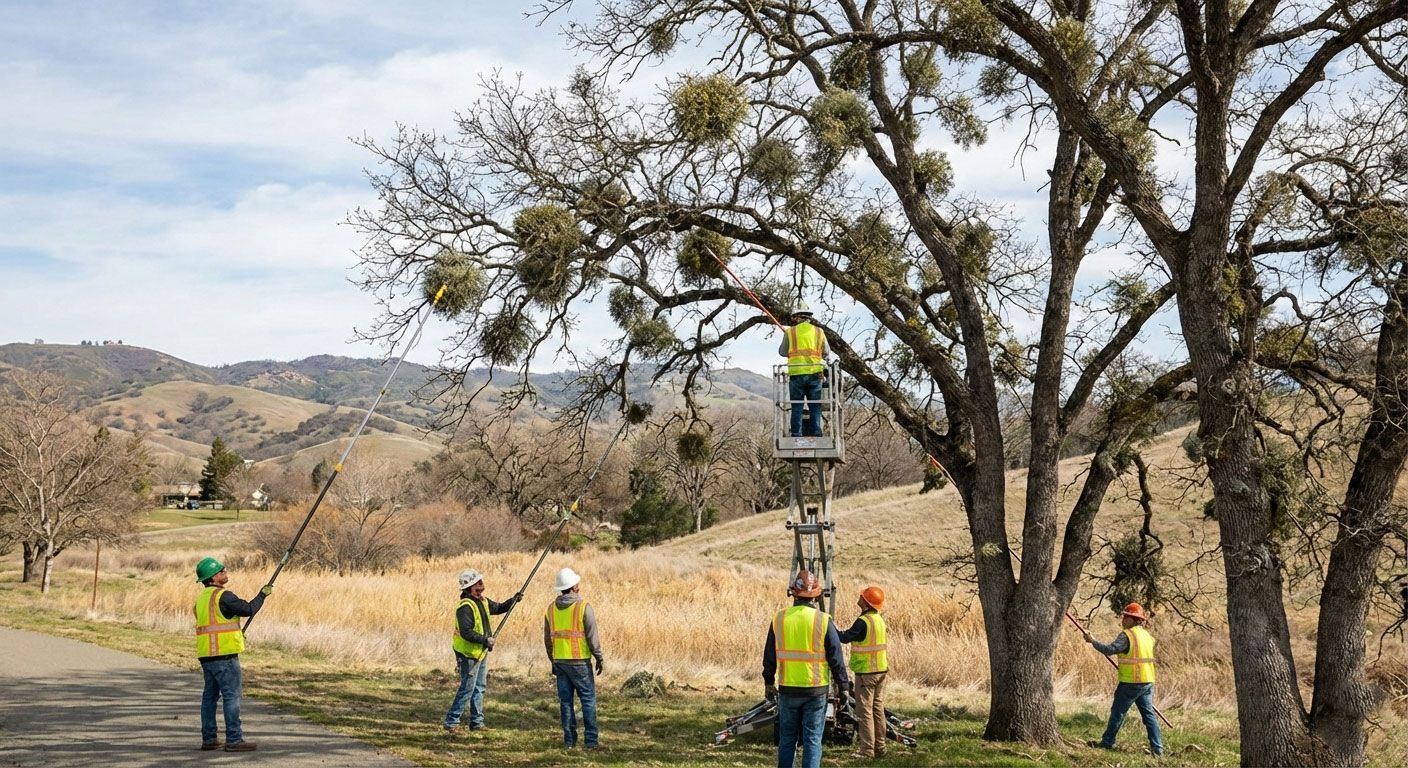
Ball moss creates dense gray-green clumps throughout tree canopies in Santa Clarita, competing for light and potentially harboring pests that threaten tree vitality. While this epiphyte doesn't directly parasitize trees, heavy infestations weaken branches and create conditions for disease.
Timing removal strategically enhances effectiveness, reduces tree stress, and minimizes the chances of rapid recolonization after cleaning.
Late Winter to Early Spring Offers Ideal Conditions
February through April provides the sweet spot for ball moss removal in Santa Clarita's climate.
- Trees enter active growth phase during these months, promoting quick recovery from minor wounds
- Cooler temperatures reduce stress on trees during the physical removal process
- New foliage emerges to fill canopy gaps left by moss removal
- Professionals can work more comfortably without extreme heat affecting safety and efficiency
- Trees have the entire growing season ahead to strengthen before facing summer heat
Spring timing allows trees to channel their energy into healing and growth rather than simply surviving environmental stress.
Avoid Summer Removal During Peak Heat
June through September presents significant challenges for ball moss removal as temperatures regularly exceed 90 degrees.
- Trees already stressed by heat and reduced moisture struggle to recover from cleaning disturbance
- High temperatures increase risk of branch dieback following the physical stress of thorough removal
- Extreme heat makes canopy work physically demanding and potentially dangerous for crews
- Reduced moisture availability limits trees' ability to compartmentalize wounds effectively
- Pest activity peaks during summer, potentially exploiting stressed trees after removal
Waiting for cooler months produces better outcomes for both tree health and worker safety while reducing recovery complications.
Fall Provides a Secondary Window
October and November offer another opportunity for ball moss removal as temperatures moderate and trees prepare for dormancy.
- Moderate temperatures reduce stress compared to summer heat extremes
- Trees can allocate resources to healing before entering winter dormancy
- Fall removal followed by winter rains helps flush away residual moss fragments
- This timing works well if you missed the spring window or experienced summer population explosions
- Cooler weather improves working conditions for thorough, careful removal
While not quite as advantageous as spring, fall timing still allows adequate recovery before seasonal changes arrive.
Consider Moisture Patterns in Your Timing
Schedule removal during Santa Clarita's dry season when ball moss receives less atmospheric moisture and may be less firmly attached.
- Drier conditions from late spring through fall make physical removal somewhat easier
- Planning removal just before anticipated rain helps trees recover through moisture-supported healing
- Monitor weather forecasts to balance accessibility against post-removal recovery needs
- Avoid removal immediately before extended dry periods that stress recovering trees
- Consider that extremely dry conditions may make some moss more brittle and easier to dislodge
Balancing these competing moisture factors requires attention to both current conditions and upcoming weather patterns.
Plan Around Tree Species and Growth Cycles
Different trees have varying periods of active growth and dormancy that should influence your removal schedule.
- Deciduous species benefit from late winter removal before leaf-out begins
- Evergreens may tolerate removal across a broader timeframe due to continuous foliage
- Consult arborists familiar with your specific tree species to determine optimal timing
- Mature trees with established root systems generally tolerate removal across more seasons
- Younger specimens still developing structure need more careful timing consideration
Species-specific planning ensures removal coincides with each tree's natural resilience periods.
Schedule Strategically for Long-Term Tree Health
Timing ball moss removal to coincide with your trees' natural resilience periods ensures the best possible outcomes and minimizes setbacks. The investment in professional removal yields maximum returns when performed during late winter or early spring, allowing trees to channel their growth energy into recovery and renewed vigor.
By avoiding extreme temperature periods and coordinating with rainfall patterns, you protect your landscape investment while addressing the moss problem effectively. Strategic timing transforms a necessary maintenance task into an opportunity to enhance overall tree health and appearance for years to come.